Casement vs Sliding Windows: Which Should You Choose?
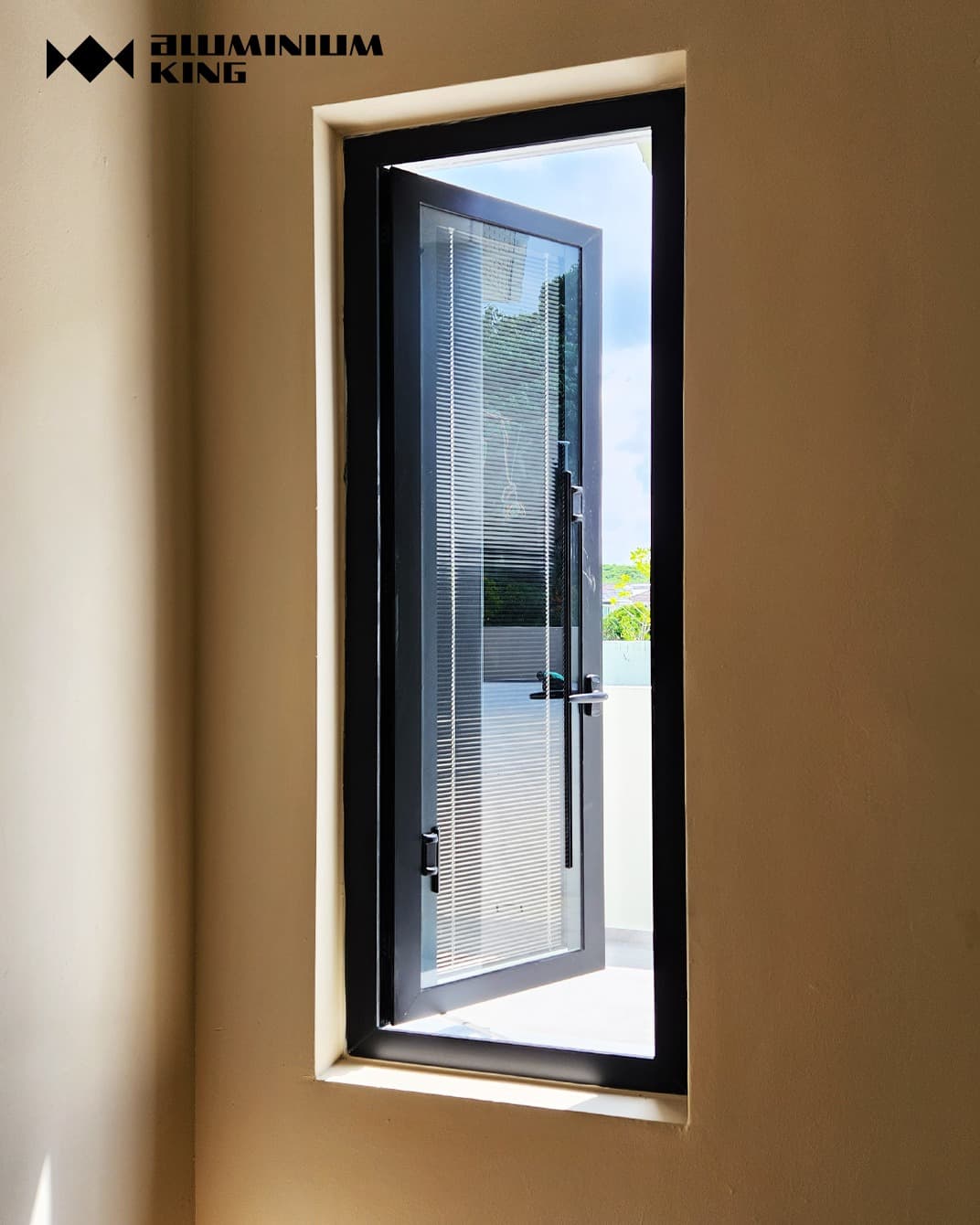
Casement and sliding windows are the two most common window types in Malaysian homes. Both are available in aluminium, both work well in our climate, and both can be made to look great — but they operate differently and suit different situations.
Here's a practical breakdown to help you decide.
How They Open
Casement windows are hinged on one side and swing outward (or occasionally inward) when opened. They're operated by a handle or a crank mechanism.
Sliding windows have two or more sashes that slide horizontally past each other on a track. One sash is typically fixed; the other slides.
Ventilation
This is where casement windows have a significant advantage.
A casement window, when fully opened, exposes the entire opening to airflow. You can also angle it to catch a breeze from a specific direction.
A sliding window, by contrast, can only ever open 50% of the frame area — because one sash is always covering the other. For the same frame size, a casement window moves roughly twice as much air.
If natural ventilation is a priority — especially in rooms like kitchens, bathrooms, or home offices — casement windows are the better choice.
Water Tightness
Casement windows generally have better water and air tightness than sliding windows. When closed, the sash presses against a continuous perimeter seal, which creates a tighter barrier against rain and wind.
Sliding windows rely on brush seals where the sashes meet, which are effective but inherently less tight. In heavy rain with strong winds, a well-installed casement window will outperform a sliding window of the same price point.
Space Requirements
Here's where sliding windows win: they need no clearance space to open. The sash slides within the frame itself.
Casement windows require the sash to swing outward. If the window is above a walkway, next to a wall, or in a location where an outward-swinging panel would be a hazard, casement is not the right choice.
For windows above kitchen counters or in tight spaces, sliding windows are almost always the practical solution.
Cleaning
Casement: The outward-opening sash makes it easy to clean both sides of the glass from inside the room. Very convenient for upper-floor windows.
Sliding: You can clean the interior glass easily. To clean the exterior of the outer sash on upper floors, you typically need to remove the sash (most aluminium sliding windows allow this) or clean from outside.
Security
Both types can be made equally secure with the right hardware:
- Casement: Multi-point locking with a key-lockable handle
- Sliding: Anti-lift blocks and key-lockable bolts through the frame
The key is the hardware quality — don't compromise on locks regardless of which type you choose.
Noise Insulation
Casement windows have a slight edge due to the tighter perimeter seal when closed. For rooms facing a busy road, casement with double-glazed IGU glass is the recommended combination.
Price
In Malaysia, casement and sliding windows at equivalent specifications are often similarly priced. Casement windows have a slightly more complex mechanism (hinges, stays, multi-point locks), but this doesn't necessarily make them more expensive than a quality sliding system.
Quick Decision Guide
Choose casement if:
- Maximum ventilation is important
- The window is accessible from inside for cleaning
- The room faces a noisy road or requires better sealing
- The design calls for a sleek, modern look
Choose sliding if:
- The window is above a countertop, walkway, or tight space
- You prefer a simpler operation mechanism
- The room is large and ventilation is less critical
- Budget is tighter (entry-level sliding is often slightly cheaper)
Can I mix both? Absolutely. Many homes use casement windows in bedrooms and living rooms (where ventilation matters) and sliding windows in kitchens, bathrooms, and service areas. We can handle the full project as a single order.
Visit our showroom to see both types in operation and get a feel for what suits your space.
Have questions?
Book a Free Showroom Visit
Our specialists will walk you through every option and help you find the right solution for your home.
Related Articles
Aluminium Folding Doors: The Complete Buyer's Guide for Malaysian Homes
Thinking about installing a folding door? Here's everything you need to know — from panel counts and glass options to what actually affects the price.
Aluminium vs uPVC Windows: Which Is Better for Malaysian Homes?
Two of the most popular window materials go head-to-head. We break down heat resistance, durability, cost, and which one suits Malaysia's climate better.